
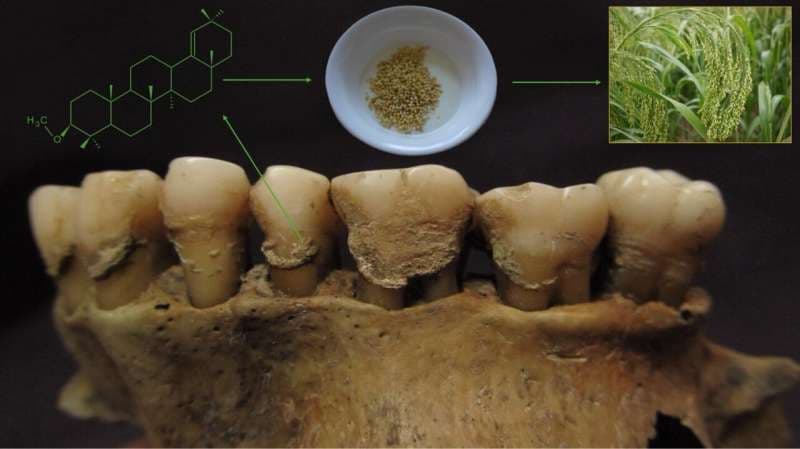
A study has, for the first time, identified minute traces of broomcorn millet consumption directly from human dental calculus, offering an unprecedented window into medieval diets and expanding the toolkit available to archaeologists for reconstructing ancient foodways. Researchers from Vilnius University, the Nara National Research Institute for Cultural Properties, the University of York, Frontier Laboratories Ltd., and the Institute of Archaeology in Kyiv applied an advanced analytical technique—thermal desorption gas chromatography–mass spectrometry (TD-GC/MS)—to human dental calculus recovered from the medieval Ostriv cemetery in central Ukraine (10th–12th centuries CE). The team successfully detected miliacin, a molecular biomarker uniquely abundant in broomcorn millet (Panicum miliaceum), in eight of the 31 individuals analyzed. This represents the first direct molecular evidence of millet consumption retrieved from human dental calculus anywhere in the world. The findings arepublishedin the journalScientific Reports.
Uncovering Medieval Diets: Broomcorn Millet Consumption Revealed Through Ancient Dental Calculus
Phys News•
Full News
Share:
Disclaimer: This content has not been generated, created or edited by Achira News.
Publisher: Phys News
Want to join the conversation?
Download our mobile app to comment, share your thoughts, and interact with other readers.