
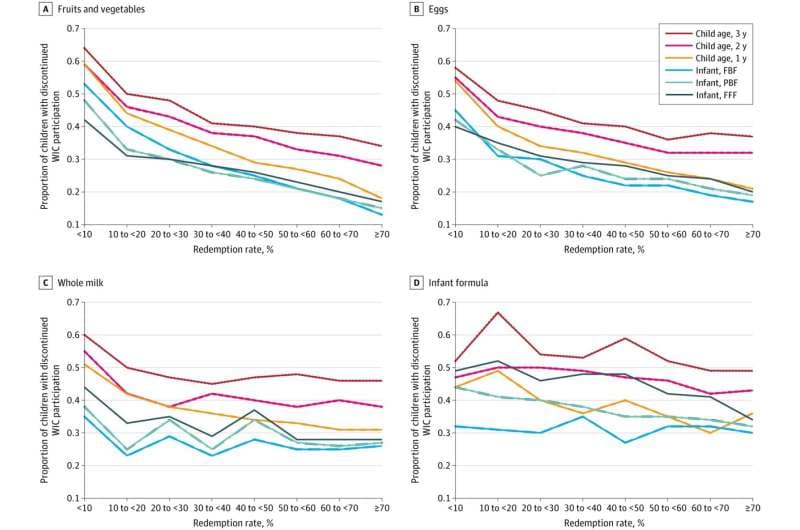
Over five decades, the Special Supplemental Nutrition Program for Women, Infants, and Children (WIC) has become known as the nation's first "food as medicine" program. Low-income families receiving WIC benefits—which provides nutritious food in designated categories, nutrition education and access to other social services—have fewer premature births and infant deaths, eat higher-quality diets, and are more likely to receive regular medical care. But many families who are income eligible to participate in WIC aren't receiving those benefits. Research has found that households who don't use the full amount of theirnutrition benefitsare more likely to drop from the program. New research by the University of Washington has found that households who redeem more of their benefits in the most popular food categories are more likely to remain in the program long-term. Better understanding these patterns could help WIC agencies identify families who might need a little extra encouragement to stay enrolled. The study waspublishedinJAMA Network Open.
WIC Program: Understanding Patterns for Long-Term Participation
Phys News•
Full News
Share:
Disclaimer: This content has not been generated, created or edited by Achira News.
Publisher: Phys News
Want to join the conversation?
Download our mobile app to comment, share your thoughts, and interact with other readers.