
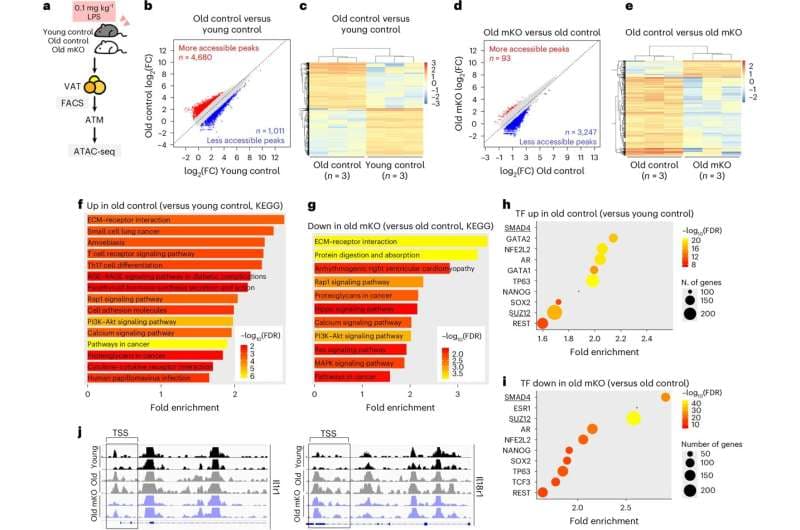
As people age, their bodies develop a dysfunctional immune system, which can leave older adults more susceptible to conditions like sepsis. New research from University of Minnesota researchers reveals how certain immune cells, known as macrophages, stay locked in an inflammatory state during aging in preclinical models. The findings arepublishedinNature Aging. In the study, researchers found macrophages produce a protein calledGDF3, which signals back to the same cells and reinforces their inflammatory behavior—ultimately worsening the body's response to sepsis. The study, performed by biochemistry graduate student In Hwa Jang, showed that GDF3 signals through SMAD2/3, inducing permanent changes in the genome. This increases inflammatory cytokines that the macrophages secrete. "Macrophages are critical to the development of inflammation; in our study, we identified a pathway which is used to maintain their inflammatory status," said Christina Camell, Ph.D., an associate professor with the University of Minnesota Medical School and College of Biological Sciences. "Our findings suggest that this pathway could be blocked to prevent theamplified inflammationthat can be damaging to organ function and may be a promising target for future treatments that reduce harmful inflammation."
Unlocking the Secrets of Age-Related Inflammation: A Potential Target for Treating Sepsis
Phys News•
Full News
Share:
Disclaimer: This content has not been generated, created or edited by Achira News.
Publisher: Phys News
Want to join the conversation?
Download our mobile app to comment, share your thoughts, and interact with other readers.