
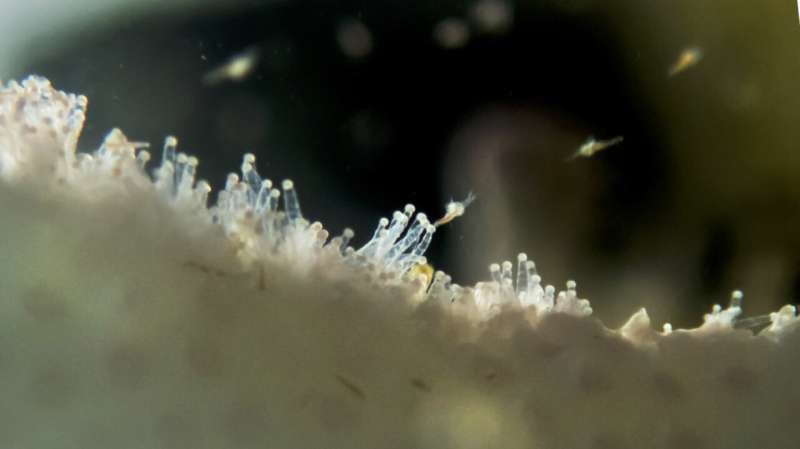
Corals obtain energy in two ways: firstly, through photosynthesis by their symbiotic algae, and secondly by taking up small food particles such as plankton directly from the water. In scientific terms, this process is known as "heterotrophy." In a studypublished inCommunications Biology, an international research team including Bremen-based scientist Marleen Stuhr (ZMT) reports that the contribution of heterotrophic food intake to energy production in corals has so far often been significantly underestimated. The underlying reason is rooted in the measurement methods themselves. Coral reefs provide a livelihood for millions of people—through fisheries, coastal protection, or tourism. But the climate crisis is putting increasing pressure on reefs worldwide. Recent scientific publications, such as theGlobal Tipping Points Report, warn that these essential ecosystems may soon reach a tipping point. Researchers are trying to find out how corals can build greater resilience against rising temperatures and ocean acidification. This requires a detailed understanding of how corals feed, the role of direct plankton uptake, and the contribution of their algal symbionts.
Corals' Hidden Feeding Habits: Uncovering the Role of Heterotrophy in Energy Production
Phys News•
Full News
Share:
Disclaimer: This content has not been generated, created or edited by Achira News.
Publisher: Phys News
Want to join the conversation?
Download our mobile app to comment, share your thoughts, and interact with other readers.