
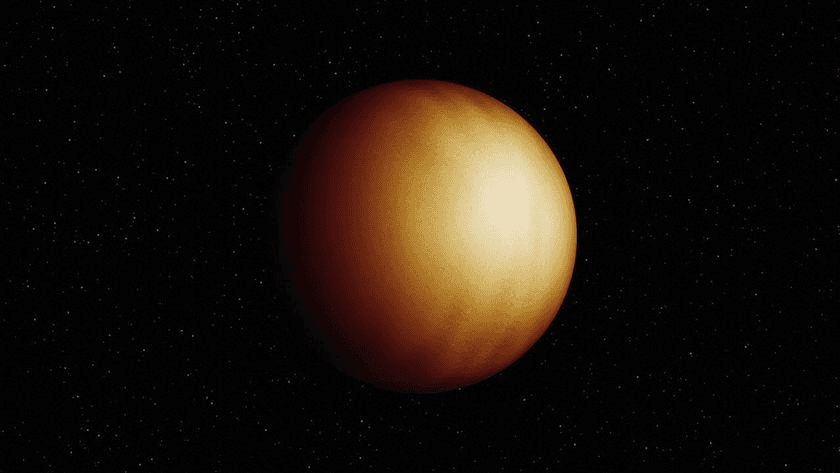
The James Webb Space Telescope (JWST) has spotted something astronomers have never fully seen before: a giant exoplanet trailing two enormous tails of helium, stretched out like a cosmic comet. The planet, known as WASP-121b or Tylos, is an ultrahot Jupiter so close to its star that its atmosphere is literally boiling away into space. What makes this discovery remarkable isn’t just the dramatic visuals. For the first time, scientists have tracked atmospheric gas escaping from an exoplanet throughout an entire orbit, offering unprecedented insight into how extreme worlds evolve—and, eventually, erode. The findings enabled byJWST’scutting-edge instruments close a major gap in our understanding of how planetary atmospheres behave under relentless stellar radiation. JWST observed WASP-121b, a gas giant located roughly 858 light-years from Earth, and detected two extended helium tails streaming from the planet’s atmosphere. These tails form as intense radiation from the host star heats the planet’s upper layers, allowing lighter elements—especially helium—to escape into space. Unlike previous observations, which only captured atmospheric loss during brief planetary transits, JWST followed the planet for more than 37 consecutive hours, covering a complete orbit.
James Webb Space Telescope Spots Giant Exoplanet with Helium Tails Streaming from Atmosphere
Breezy Scroll•
Full News
Share:
Disclaimer: This content has not been generated, created or edited by Achira News.
Publisher: Breezy Scroll
Want to join the conversation?
Download our mobile app to comment, share your thoughts, and interact with other readers.