
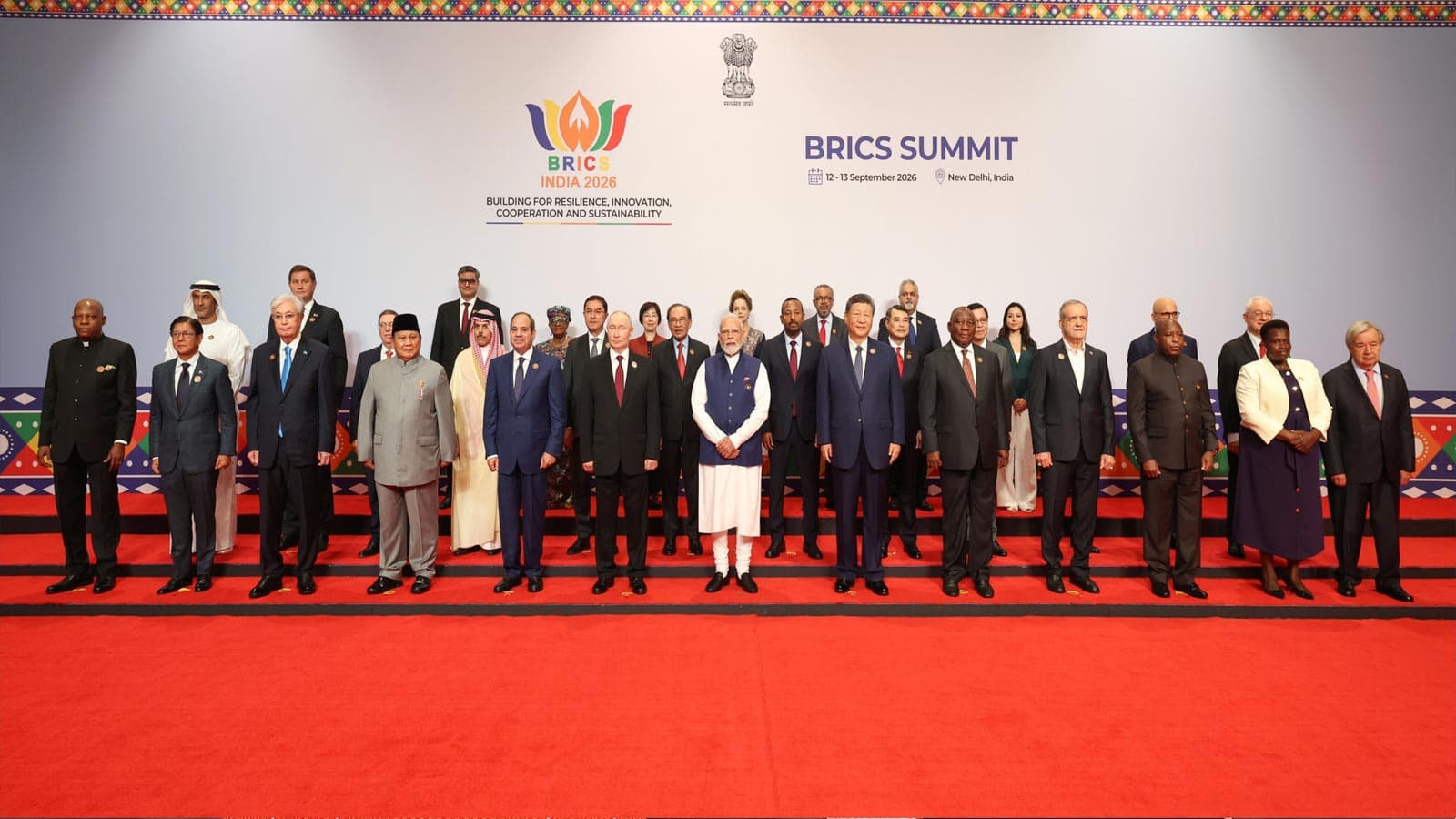
The 18th BRICS Summit, held in New Delhi on September 12–13, 2026, came at a particularly difficult moment for international relations. As BRICS marked two decades after its creation, the grouping has expanded well beyond its original five members and now brings together countries with different political systems, economic interests and geopolitical priorities. Against this backdrop, India’s chairmanship sought to demonstrate that BRICS can remain a platform for cooperation without becoming an anti-Western alliance. The summit, held under the theme “Building for Resilience, Innovation, Cooperation and Sustainability”, reflected New Delhi’s familiar approach of combining strategic autonomy with multi-alignment and dialogue. Guided by Principles India’s foreign policy remains firmly rooted in strategic autonomy and multi-alignment. Its extensive economic, technological and strategic relationships with Western countries exist alongside its long-standing partnerships with Russia and its engagement with China and the wider Global South. This makes it difficult for New Delhi to view BRICS as an instrument directed against any particular power. Hence, India has attempted to position itself as a bridge-builder. The objective is not to create another rigid bloc in an increasingly fragmented international system, but to provide a platform where countries with different interests can still cooperate on issues of common concern. This approach was particularly important as BRICS faced external pressure over issues such as tariffs, trade restrictions, sanctions, energy security and the growing debate over reducing dependence on the US dollar. The New Delhi Declaration expressed concern over unilateral trade and economic measures and reaffirmed the importance of an open, fair and inclusive international trading system. At the same time, BRICS members stopped short of turning the grouping into an ideological anti-Western coalition. In Times of Trial The most difficult test for India’s chairmanship came from geopolitical tensions within the enlarged BRICS itself. The presence of countries with sharply different positions on major international and regional conflicts makes consensus increasingly difficult. The tensions involving Iran and the United Arab Emirates were an important test of India’s emphasis on dialogue and consultation. The New Delhi Summit demonstrated that even amid serious disagreements, BRICS members can maintain communication and support diplomatic efforts to prevent further escalation. The Declaration called for maximum restraint, dialogue and diplomacy in addressing the crisis in West Asia. This is significant because the expansion of BRICS has also increased the diversity of interests within the grouping. India’s achievement was not necessarily to resolve every disagreement, but to ensure that these differences did not prevent the organization from producing a consensus document. The New Delhi Declaration The principal outcome of the summit was the New Delhi Declaration, adopted by consensus. Its significance lies less in dramatic departures from previous BRICS declarations than in the breadth of practical areas in which members agreed to deepen cooperation. The Declaration strongly condemned terrorism in all its forms and specifically condemned the April 2025 terrorist attack in Jammu and Kashmir. It called for zero tolerance towards terrorism, action against terrorist financing and safe havens, and renewed efforts towards the adoption of the Comprehensive Convention on International Terrorism at the United Nations. For India, this represents an important diplomatic achievement. The document also reaffirmed the need for a more representative international order and greater participation of developing countries in global decision-making. BRICS continues to support reform of global institutions, including the United Nations Security Council, reflecting its broader objective of giving the Global South a stronger voice in international governance. Economic cooperation remains another central pillar. The Declaration supports greater use of national currencies in trade and investment and continued work on improving the interoperability of cross-border payment and messaging systems. This is not the creation of a common BRICS currency, but rather an incremental effort to make cross-border transactions more resilient and reduce excessive dependence on any single financial system. Commenting on the essential nature of such declarations in the Security Index Yearbook Vol. 2, Deputy Foreign Minister of Russia and BRICS Sherpa, Sergey Ryabkov, noted: “Practical results are reflected in the final documents. It’s enough to look at the lengthy declarations of the leaders, adopted in Kazan in 2024 and in Rio de Janeiro in 2025 – it’s clear what has been done and what will be done next. This action plan is, by and large, not just a statement of intent, but a de facto roadmap for practical work”. Overall, this pragmatic approach holds equally true for the New Delhi Declaration, adopted under the Indian chairmanship. From Political Differences to Practical Cooperation Perhaps the most important feature of the New Delhi Declaration is its emphasis on areas where BRICS members have tangible common interests. Food security is particularly important. The Declaration supports discussions on a BRICS Grain Exchange, stronger food reserves, climate-adaptive seeds and cooperation in agriculture. It also welcomed the Global Forum on Farmers’ Rights in Seed Systems and new BRICS networks dealing with agroecology, regenerative agriculture and digital agriculture. These initiatives reflect India’s effort to shift BRICS cooperation from broad political statements towards practical developmental outcomes. The same approach is visible in health, where members endorsed greater cooperation in digital healthcare, disease surveillance, vaccine research, medical production and preparedness for future health emergencies. Cooperation on energy security, critical minerals, climate resilience and sustainable development also featured prominently. Technology has emerged as another important area. The Declaration recognizes the transformative potential of artificial intelligence while emphasizing that AI governance must be safe, inclusive, reliable and accessible to developing countries. India’s hosting of the AI Impact Summit earlier in 2026 provided an important foundation for this agenda. The result is a pragmatic model of BRICS cooperation. Political and security disagreements remain substantial, but they need not prevent cooperation in agriculture, health, technology, trade, energy, finance and climate action. Keeping BRICS Relevant The central challenge for BRICS is to preserve its identity while accommodating its expanding membership and increasingly diverse interests. The larger the grouping becomes, the more difficult consensus will be. Yet, its value lies precisely in providing a forum where countries that do not agree on everything can still work together on issues of common interest. India’s chairship, therefore, sought to demonstrate that BRICS can be neither a closed club nor an anti-Western alliance. Its future relevance will depend on whether political declarations can be translated into concrete outcomes. The New Delhi Summit suggests that India’s preferred approach is clear: engage without aligning, cooperate without creating rigid blocs, and strengthen the voice of the Global South without turning BRICS into an instrument against the West. In an increasingly fragmented international system, this bridge-building role may prove to be one of India’s most important contributions to the evolution of BRICS.
BRICS Summit: India's Chairmanship Seeks to Build Bridges Amidst Diverse Interests
DD News•
Full News
Share:
Disclaimer: This content has not been generated, created or edited by Achira News.
Publisher: DD News
Want to join the conversation?
Download our mobile app to comment, share your thoughts, and interact with other readers.