
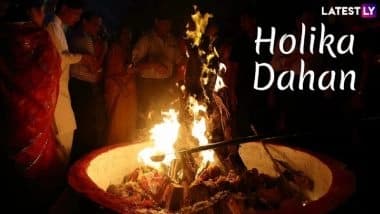
Mumbai, February 23:The traditional celebrations of Holika Dahan, the ceremonial bonfire preceding the festival of colors, face a significant scheduling shift this year due to a rare total lunar eclipse occurring on March 3, 2026. While the festival is typically observed on the full moon night of the Phalguna month, religious scholars and astrologers have advised devotees to perform the "Chhoti Holi" rituals on the evening ofMonday, March 2, or in the early hours ofMarch 3, to avoid the inauspiciousSutakperiod associated with the eclipse. The total lunar eclipse, or "Blood Moon," is set to begin on the afternoon of March 3 at approximately 3:20 PM and conclude at 6:47 PM. Because the eclipse will be visible across most of India, theSutak kaal—a period during which religious activities are traditionally paused—will commence nine hours prior, starting early Tuesday morning.Holi 2026 Date: Is It on March 3 or March 4? Clear the Confusion Around the Festival of Colours. To maintain the sanctity of the ritual, many panchang (almanac) experts recommend lighting the Holika bonfire before theSutakbegins. The primary auspicious window (Muhurat) for those following the early schedule is between5:30 AM and 6:23 AM on Tuesday, March 3, immediately after the conclusion of theBhadraperiod and before the onset of the eclipse's restrictive hours. Determining the exact time for Holika Dahan is a complex calculation involving thePurnima Tithi(full moon phase) and the absence ofBhadra, a period considered unfavorable for auspicious work. Purnima Begins:5:55 PM on March 2, 2026 Purnima Ends:5:07 PM on March 3, 2026 Auspicious Alternative:6:48 PM to 8:50 PM on March 3 (Post-Eclipse) While some regions may opt to perform the bonfire after the eclipse ends on Tuesday evening, the overlap of the eclipse with the traditional peak hours has led many temple committees to advocate for the Monday night/Tuesday morning transition.Holashtak 2026: 8-Day Inauspicious Period Set To Begin From February 24 Ahead of Holi. Holika Dahan serves as a spiritual prelude to the vibrant "Dhulandi" or Rangwali Holi. The ritual commemorates the ancient legend of the young devotee Prahlad and his aunt, Holika. According to the Vishnu Purana, the demon king Hiranyakashipu attempted to kill his son Prahlad for his devotion to Lord Vishnu by having Holika, who was immune to fire, sit with him in a blazing pyre. However, Holika was consumed by the flames while Prahlad emerged unharmed, symbolizing the victory ofdharma(righteousness) over ego and evil. Today, the bonfire represents the burning away of inner negativity and the arrival of the spring season. Despite the astronomical complications, the festival of colors will proceed as planned onWednesday, March 4, 2026. Markets across India are already seeing an influx of natural gulal, sweets likegujiya, and traditional festive items. Authorities in major cities have issued standard safety advisories, urging citizens to use eco-friendly colors and remain mindful of the environment during the celebrations. Following the conclusion of the lunar eclipse on Tuesday evening, the "Holashtak" (an eight-day period where auspicious tasks are avoided) will officially end, clearing the way for the nationwide celebrations on Wednesday. (The above story first appeared on LatestLY on Feb 23, 2026 06:27 PM IST. For more news and updates on politics, world, sports, entertainment and lifestyle, log on to our websitelatestly.com).
Holi 2026: Rare Lunar Eclipse Shifts Holika Dahan Celebrations; Festival Proceeds as Planned
Latestly•
Full News
Share:
Disclaimer: This content has not been generated, created or edited by Achira News.
Publisher: Latestly
Want to join the conversation?
Download our mobile app to comment, share your thoughts, and interact with other readers.