
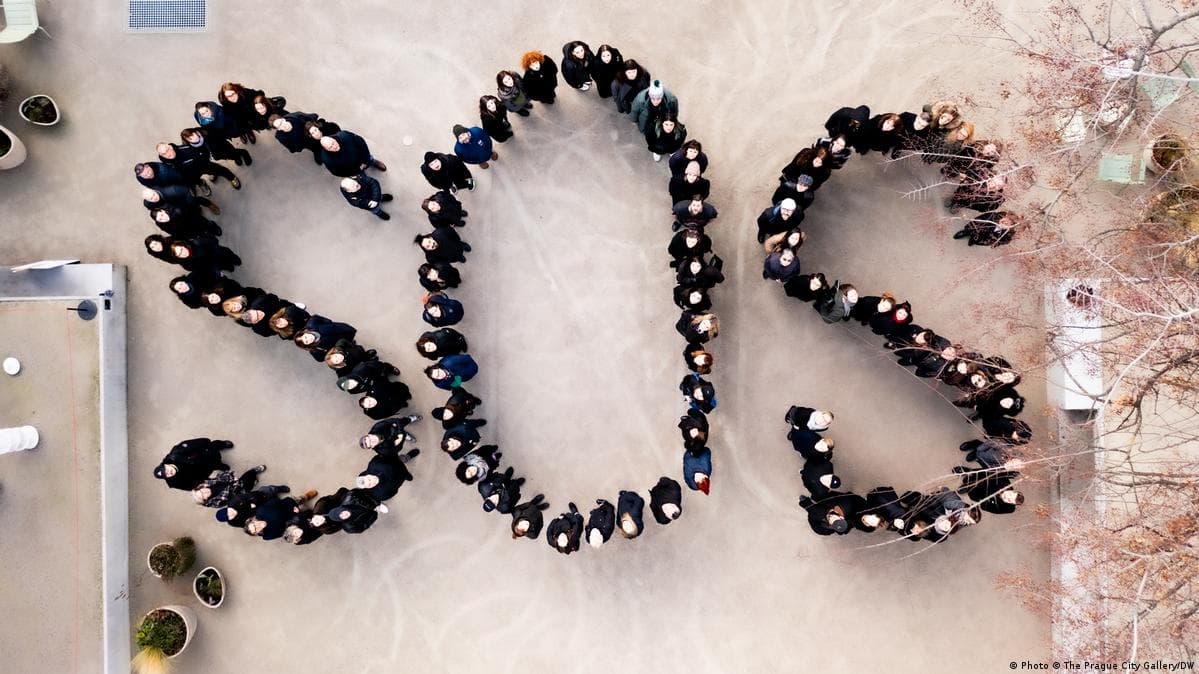
WhenRobert Ficoreturned to power andformed his fourth administration in late 2023, Alexandra Kusa knew her 14-year tenure as the head of the Slovak National Gallery was likely coming to an end. The Ministry of Culture had gone to the far-right Slovak National Party. A former TV presenter namedMartina Simkovicova— who made her name spreading COVID disinformation on YouTube — was awarded the ministerial role. "There had been signs for quite some time, because other directors were being dismissed as well," Alexandra Kusa told DW from Bratislava. "They were also signaling publicly what they didn't like," she said. Minister Simkovicova said she wanted official Slovak culture to better represent what she called traditional Slovak values, rather than work that explored liberal orLGBTQ+themes, for example. "The culture of the Slovak people should be Slovak. Slovak and no other. We tolerate other national cultures, but our culture is not a mixing of other cultures," Simkovicova told reporters in November 2023, setting out what would be her cultural policy priorities. Within six months, that policy began to result in personnel changes. The head of the Slovak National Library was removed, followed by the director of the Slovak National Theatre in August 2024. Kusa drafted a statement of support. The next day she, too, was fired. "Journalists began asking the ministry why I had been dismissed, and that's when they began inventing all sorts of reasons, constantly changing them," said Kusa. "First it was because the gallery was empty. Then because it was too full. Then because there was no Slovak flag outside the building. Then because of the renovation work that had taken place two years earlier," Kusa added. "They never announced the real reason, which is that they simply didn't want to work with us, which is a shame, because it was the truth. It wouldn't have cost them anything," she said. Not that Alexandra Kusa could imagine working with Martina Simkovicova and her colleagues at the ministry. "They're not interested in cooperation. They're not really interested in culture. They have this feudal idea of management — my person, your person — the result doesn't interest them. You can't work with someone like that," Kusa told DW. "It's not a different opinion about culture. It's a different universe." Over 100 curators and other staff left the Slovak National Gallery after Kusa's firing. She was replaced by three temporary directors in quick succession. Artists protested in vain as their work was stripped from the walls. Major exhibitions were cancelled. International partners withdrew their cooperation. Last summer, the turmoil spilled into the street, when activists set up a symbolic protest space next door, calling it the "Free National Gallery." It was part of a broader protest movement known as the "Cultural Strike." Alexandra Kusa has now curated a new exhibition at Prague City Gallery inneighboring Czechia, documenting the saga of the Slovak National Gallery. The ground floor of the exhibition, which is entitled"Free National Gallery – Description of a Struggle,"is a meticulous recreation of the firings and hirings and public protests. The first floor contains works by Slovak artists whose works will no longer be displayed in the country's most prestigious art gallery. "Why are we doing this exhibition? To show that all these things can happen very quickly, very rapidly, and that open society is under pressure," said Magdalena Jurikova, director ofPragueCity Gallery. Jurikova told DW that what happened inSlovakiacarries a clear warning for other countries, including Czechia, where a conservative populist government took power in January. The Culture Ministry's remit in both countries extends to the national broadcasters. In Slovakia, critics saythat institution has been gutted and brought to heel. Czech TV and Radio — which is funded by a license fee — is still largely free from direct political interference.For now. "Nobody knows what will happen. We're only a few months into the Babis government, but there are problems with the financing of public TV and radio. And those are the first steps," Jurikova told DW. Martina Simkovicova recently visited Prague, part of a gradual thawing of relations underPrime Minister Andrej Babisafter achilly few years. She met her Czech counterpart Oto Klempir, who caused some alarm by telling reporters afterwards that the Slovaks were "ahead" of the Czechs in reforming their public media funding, saying she'd advised him on what "pitfalls" to avoid. Klempir has previously defended the Czech license fee, although it's unclear for how much longer he will do so. Back in Bratislava, Alexandra Kusa says the Slovak National Gallery is largely empty. Artists have boycotted it. The public avoids it. "We've seen what they put on show. Just a bit of folklore, a few flags on buildings. That's not culture. That's cliché. It's hollow," she said. "Today it's a house of ghosts." Edited by: Aingeal Flanagan
Slovak National Gallery Director Fired Amid Cultural Purge
DW•
Full News
Share:
Disclaimer: This content has not been generated, created or edited by Achira News.
Publisher: DW
Want to join the conversation?
Download our mobile app to comment, share your thoughts, and interact with other readers.