
B
Breezy Scroll
Sep 21, 2026, 09:45 AM
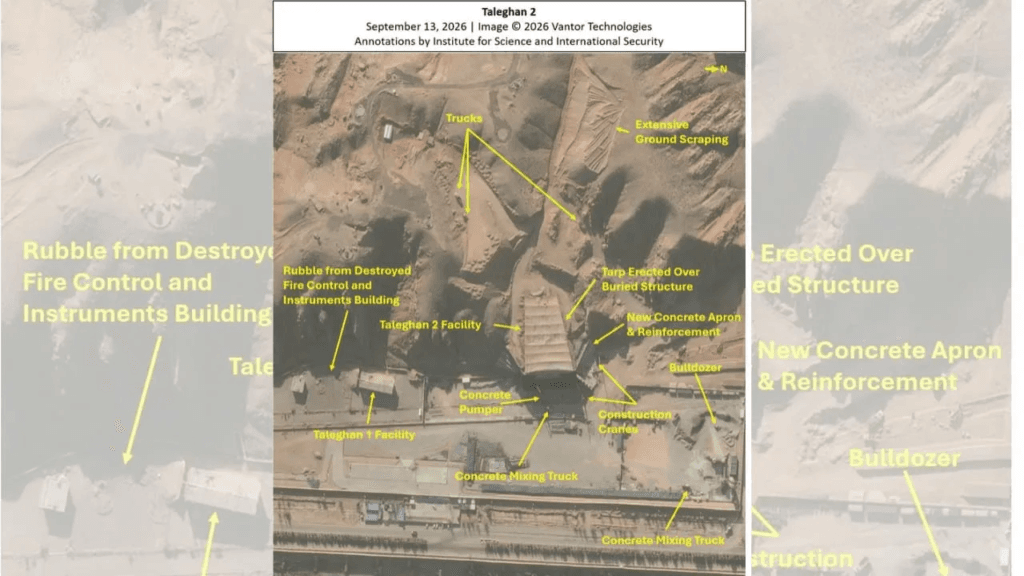
Iran Rapidly Rebuilding Taleghan 2 Facility Amid Nuclear Concerns
New satellite imagery suggests Iran is rapidly rebuilding the Taleghan 2 facility inside the Parchin military complex, a site long associated with allegations of past nuclear weapons-related research. The images, captured by Vantor on September 13 and analyzed by the Institute for Science and International Security (ISIS), show heavy construction activity at the damaged facility. A large tarp appears to cover the structure, while cranes, bulldozers, concrete mixers, dump trucks and concrete pumps operate around the site. The development does not, by itself, establish that Iran is currently conducting nuclear weapons work at Taleghan 2. But the facility’s history, repeated Israeli strikes and the apparent effort to rebuild and further harden it have renewed questions about Tehran’s intentions. Taleghan 2 is located within the sprawling Parchin military complex, about 30 kilometers (20 miles) southeast of Tehran. According to an assessment by the Institute for Science and International Security, satellite imagery from September 13 shows reconstruction moving at a significantly faster pace than earlier this year. A large covering has been erected over the damaged underground structure. The tarp appears to conceal construction activity from overhead satellite imagery and aerial reconnaissance. The surrounding site also shows extensive use of heavy construction equipment, including: The institute said a new concrete apron has been built along the sides of the facility, adding another layer of protection around the structure. The imagery therefore appears to show more than simple debris removal. It indicates an organized effort to restore and reinforce a facility that has already been targeted multiple times. The significance of Taleghan 2 comes largely from its history. The facility has been associated with Iran’s former Amad nuclear weapons program, which Western intelligence agencies have described as an effort to develop the capability to build a nuclear weapon. A 2007 US National Intelligence Estimate assessed with high confidence that Iranian military entities had been working under government direction on nuclear weapons development before Tehran halted the program in 2003. The International Atomic Energy Agency has separately documented activities under Iran’s AMAD Plan involving areas including high explosives and work related to the possible re-engineering of a missile re-entry vehicle. That history is why construction at Taleghan 2 attracts particular attention. However, it is important to distinguish between historical evidence and what satellite imagery can establish today. The current images demonstrate construction and fortification activity, but they do not reveal with certainty what equipment will eventually be installed inside the rebuilt structure. Taleghan 2 has been struck repeatedly. Israel attacked the facility in October 2024. Iran subsequently began rebuilding it in 2025, according to satellite imagery analyzed by ISIS. During that reconstruction, analysts observed the installation of a large cylindrical structure inside the facility. ISIS assessed that it could have been a high-explosive containment vessel potentially suitable for experiments related to nuclear weapons development. The facility was then struck again by Israel in March 2026. Satellite images taken after the March attack showed three large penetration points through the roof of the hardened structure. According to the ISIS assessment, the strikes penetrated the section where the suspected high-explosive containment vessel had been located. The institute concluded that the strikes likely destroyed the vessel and caused extensive damage to the building’s internal structure. Repair work reportedly began again in June 2026. Early activity involved clearing debris and covering the penetration holes created by the bunker-busting weapons. Later imagery showed more permanent concrete reinforcement being added around the damaged areas. The September imagery points to a much larger reconstruction effort. The sequence is significant: March 2026: Israeli strikes heavily damage Taleghan 2. June 2026: Iran begins repair work and covers the strike-related penetration holes. Following months: Construction expands to include additional concrete reinforcement. September 13, 2026: Heavy construction activity is visible around the site, with additional protective structures and a large tarp covering the facility. The repeated reconstruction suggests that Tehran considers the facility important enough to restore despite the possibility of another attack. The new construction appears to have a defensive purpose. The facility is underground and has already been targeted by bunker-busting weapons. Additional concrete structures could make the site more resistant to future aerial attacks. The construction is notable because it goes beyond simply repairing visible strike damage. Reinforcement around the facility could provide additional structural protection against blasts. However, satellite imagery cannot establish the precise engineering purpose of every new structure. It also cannot independently determine whether the additional protection is intended specifically for nuclear-related equipment or for another military purpose. The large tarp adds another layer of uncertainty because it prevents satellites from obtaining a clear view of the work taking place underneath. No. The imagery provides evidence that Iran is rebuilding and fortifying Taleghan 2. It does not independently establish what the reconstructed facility will be used for. The concern stems from the site’s historical association with Iran’s alleged nuclear weapons research, particularly work involving high explosives. There is also an important distinction between a nuclear-linked facility and an active nuclear weapons production site . Satellite imagery can reveal construction patterns, buildings, vehicles and structural changes. It generally cannot determine precisely what activities are taking place inside a covered or underground facility without additional intelligence or physical access. That makes the purpose of the rebuilt Taleghan 2 one of the central unanswered questions. Taleghan 2 is part of a larger challenge facing international efforts to understand the condition and purpose of Iran’s nuclear-related infrastructure. Satellite imagery has become an important source of information because some sensitive Iranian facilities are underground, heavily protected or difficult for international inspectors to access. The latest imagery also comes amid continuing international concern over Iran’s nuclear activities and the ability of international inspectors to monitor its facilities. Restrictions on access can create an intelligence gap. When inspectors cannot physically examine a location, analysts have to combine commercial satellite imagery, historical records, intelligence assessments and other information to determine what may be happening. That makes developments at sites such as Taleghan 2 particularly important to outside observers. Several key questions remain unanswered. First, what will the rebuilt facility contain? The September imagery cannot establish what equipment is being installed beneath the tarp. Second, will the site return to its historical role? The facility’s previous association with high-explosive testing makes that possibility significant, but current imagery alone cannot confirm it. Third, why is Iran investing in additional hardening? The construction could reflect a desire to protect a strategically important military installation, but the exact reason remains unknown. Finally, how much of the underground facility has actually been reconstructed? Commercial satellite images provide an exterior view, while much of Taleghan 2 remains concealed below ground. These uncertainties mean the latest development should be described as evidence of substantial reconstruction rather than proof of an active nuclear weapons program. The next major indicator will be what appears at the site once construction progresses further. Future satellite imagery could reveal changes in the building’s external configuration, new ventilation systems, equipment deliveries, or other infrastructure that may help analysts determine the facility’s intended purpose. International access would provide a much clearer picture, but until that happens, assessments will continue to rely heavily on satellite imagery and intelligence analysis. For now, the available evidence shows a determined Iranian effort to reconstruct and strengthen Taleghan 2, a facility with a long history of scrutiny over suspected nuclear weapons-related activities. The imagery raises important questions about Tehran’s intentions, but it does not provide definitive evidence that Iran is currently using the site for nuclear weapons development.
73 shares
😐